Condominial and Simplified Sewerage
Shallow, small-diameter sewers laid through yards and alleys at a fraction of the cost of conventional sewers, and the household work that makes sure people actually connect.
A sewer only works if the toilets connected to it are water-based
- Low cost: shallow pipes run between houses and through blocks, not under the street, so less digging and smaller pipes.
- The connection decides success: networks rarely fail in the main pipe. They fail at the household, where dry pits, direct-drop latrines, solids and rags enter a pipe laid at minimum slope.
- Survey before you connect: every household toilet is assessed and, where needed, converted to pour-flush with a water seal.
- Community involvement: households agree the route through their plots and help keep the line clear.
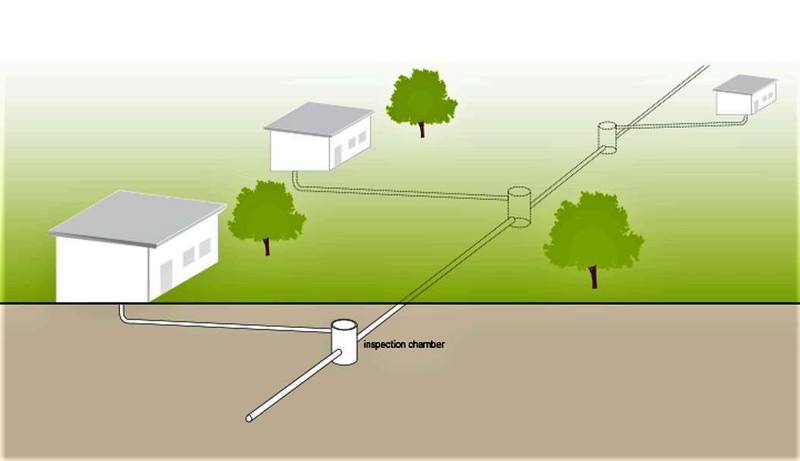
Condominial sewer connections, Nakuru
A feasibility study and pilot of condominial (simplified) sewers in the Murogi cluster of Nakuru, Kenya, for the local water utility.
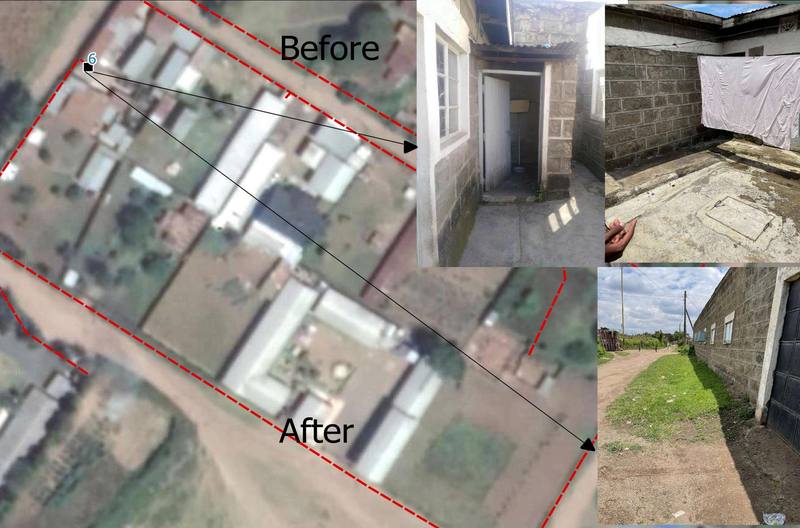
Before a single connection, every household toilet was surveyed, and we found six different situations, each needing its own conversion to pour-flush:
- Traditional pit, no permanent structure: build a new pour-flush toilet.
- Ventilated improved pit (VIP) latrine with a shower: convert the shower room to pour-flush.
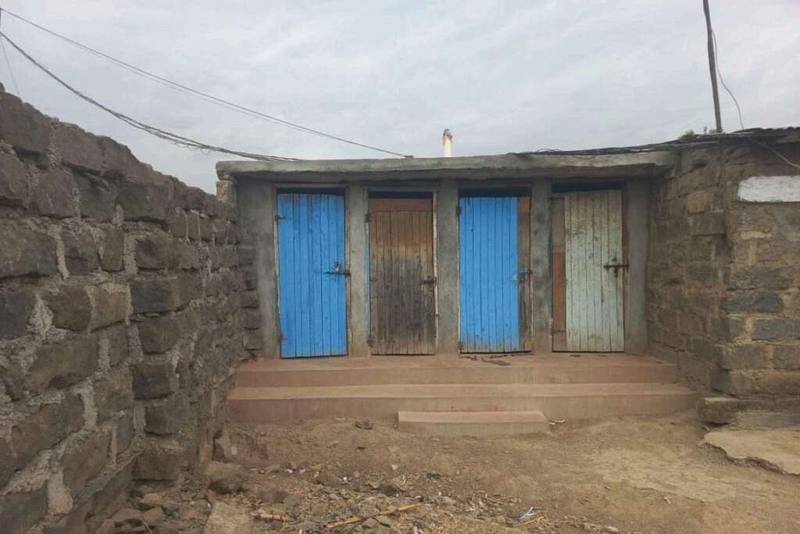
- VIP latrine: convert one of its rooms to pour-flush.
- VIP latrine with a store: convert the store to pour-flush.
- Traditional pit latrine: convert it to pour-flush.
- Pour-flush toilet on a septic tank: reroute it to the sewer.
The pilot connected 83 households. They joined for a free connection, safer toilets that no longer collapse in the rainy season, and a local by-law requiring connection within 300 metres of a sewer.
What we offer water utilities
Feasibility and routing of condominial networks, household toilet surveys, conversion designs and costs for each scenario, artisan training for the conversions, and the community engagement that gets households connected.