Faecal Sludge Treatment
Most towns run on pits and septic tanks. We help water utilities empty, transport and treat the sludge safely, and turn it into compost or fuel instead of dumping it.
The whole chain
A treatment plant without emptying is an orphan asset
- Safe emptying: portable motorised pumps for narrow paths that vacuum trucks cannot reach, run as a local service business.
- Transport and reception: screening, scheduling and reception that keep the plant running.
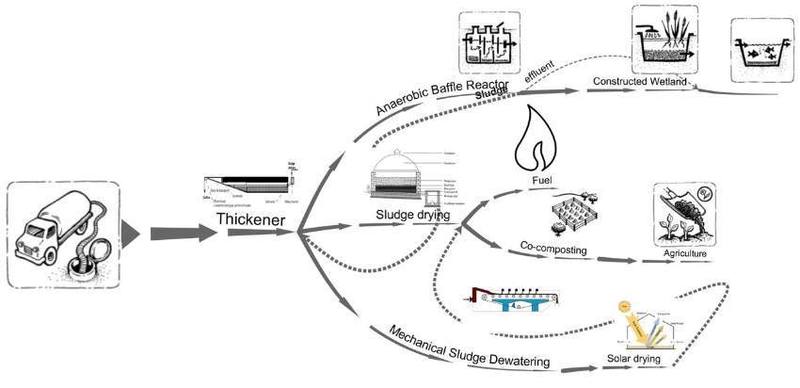
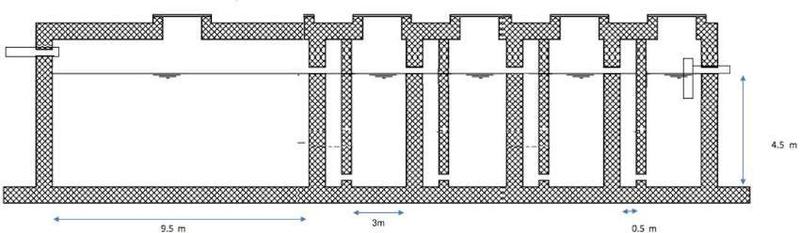
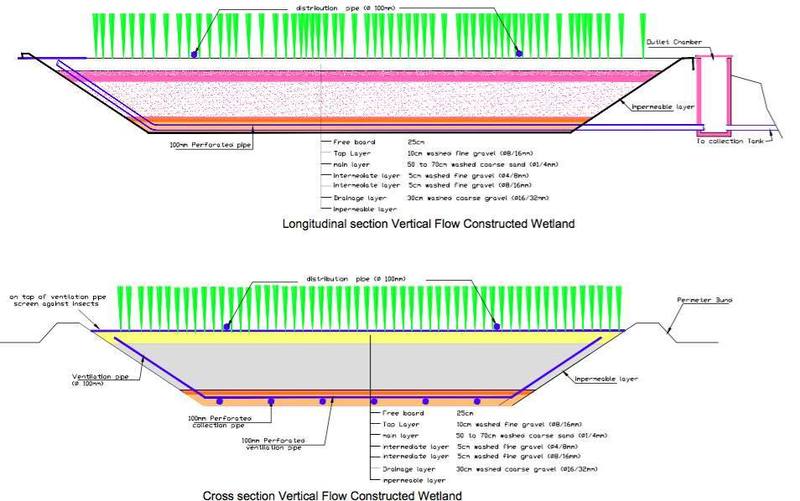
- Treatment: thickeners and settling tanks, anaerobic baffled reactors, drying beds and vertical flow constructed wetlands, sized to your sludge volumes.
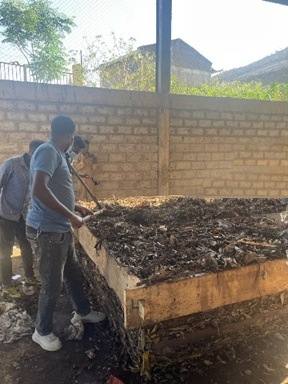
- Reuse: co-composting for agriculture, or dried sludge as fuel.
- Running it: operating models, costs and the water utility's role, so the plant is planned to be operated, not just built.
Example
Faecal sludge treatment plant feasibility study, Kigali
Rwanda Water and Sanitation Corporation (WASAC)
Our team's experience includes the feasibility study and designs for a city-scale faecal sludge treatment plant for Kigali, prepared for WASAC, Rwanda's national water and sanitation utility. It covered the current sludge situation, treatment options, process designs, reuse as compost and fuel, costs, and the water utility's role in running the plant.