Toilet-in-a-Box
From a field question about why families lacked decent toilets to a modular product built by local enterprises across two regions.
Why do so many families still not have a decent toilet?
It would be wrong to assume people don't want one. Every family wants a clean, private, safe and dignified toilet. So we went to the field to find out what was really getting in the way.
Our scoping looked at the whole system around a toilet:
- Households: interest, willingness and ability to pay, space, health and safety concerns.
- Finance: whether lenders would offer loans for household sanitation.
- Supply: who produces and builds what, and how the pieces connect.
- Government: the role of local authorities and the rules in place.
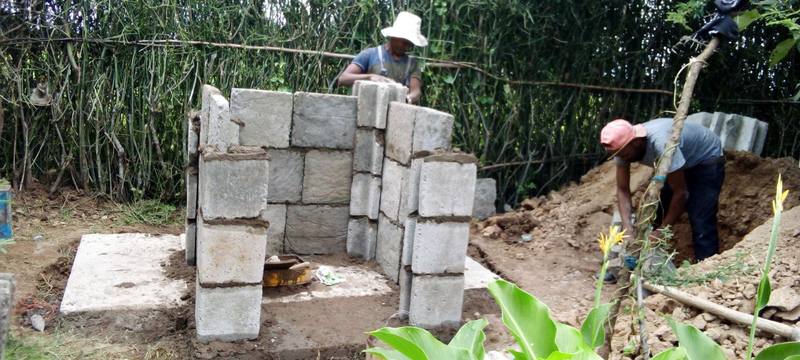
Two bottlenecks: the product and the ecosystem
An incomplete product
Almost every product on the market was just a toilet slab. The household still had to dig and line the pit, find a mason and build a shelter, often getting the measurements wrong. The result was the dignity deficit: dark, smelly, unsafe latrines that collapse in the rains, especially dangerous for women and children.
A scattered supply chain
No one offered a complete service. Each family had to act as its own contractor: pit diggers, stone suppliers, cement shops, transport and masons, all arranged separately. That meant high costs, long delays, and partial toilets or none at all.
Can we make a cheaper, better and complete on-site toilet, for both wet and dry systems, and a supply chain that can deliver it?
Designing Toilet-in-a-Box
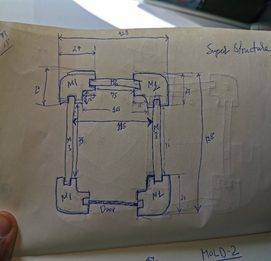
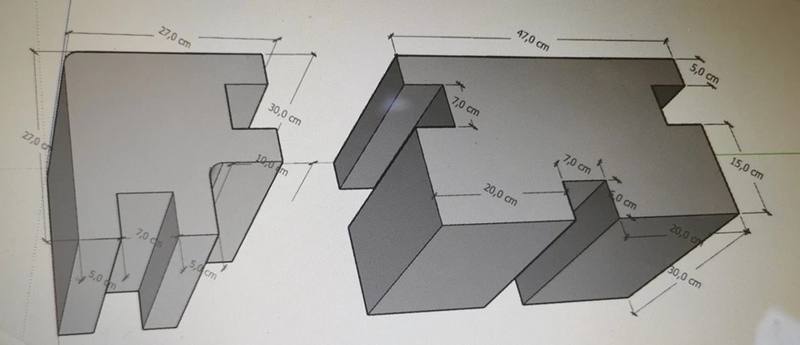
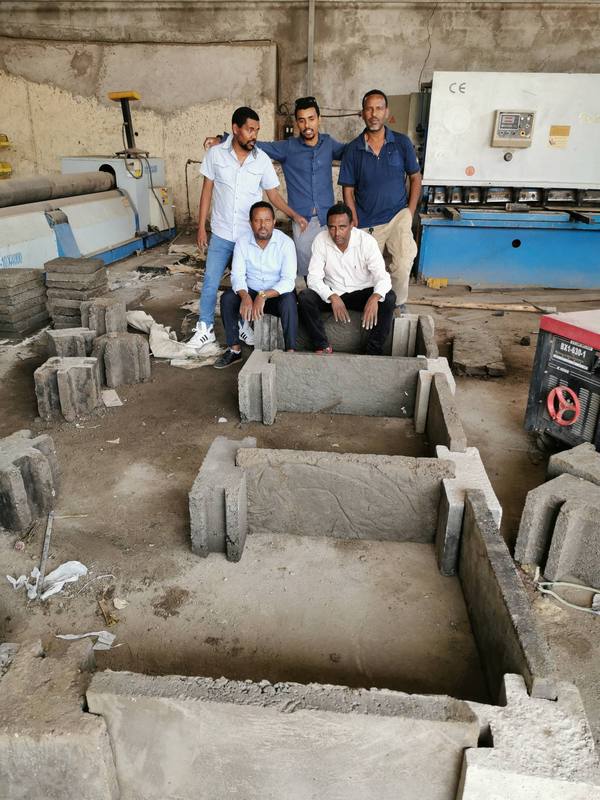
The first concept was drawn with pencil and paper: interlocking panels and joints that make up the pit lining, the slab and the walls, so rooms and pits can simply continue. Each piece had to be light enough for one artisan to handle on site.
The validation loop
- Getting the fit right: casting trials to tune joint tolerances so panels seat firmly without binding or chipping on site.
- Same method above and below ground: an artisan who can build the walls can line the pit in exactly the same way.
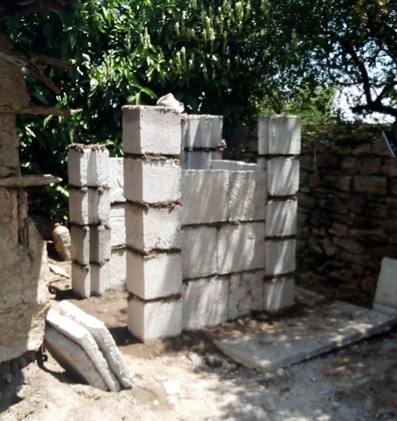
- Real households: demonstration units with early adopters to test use, doors and ventilation, cleaning, and the sense of dignity and safety.
- Built for the rains: a lined pit keeps its shape when the soil is waterlogged, where unlined pits are at risk of collapse.
A product without a supply chain stays a prototype
We didn't want to become a factory. We wanted local businesses to own production and installation, so the product could outlive any project.
Production and delivery
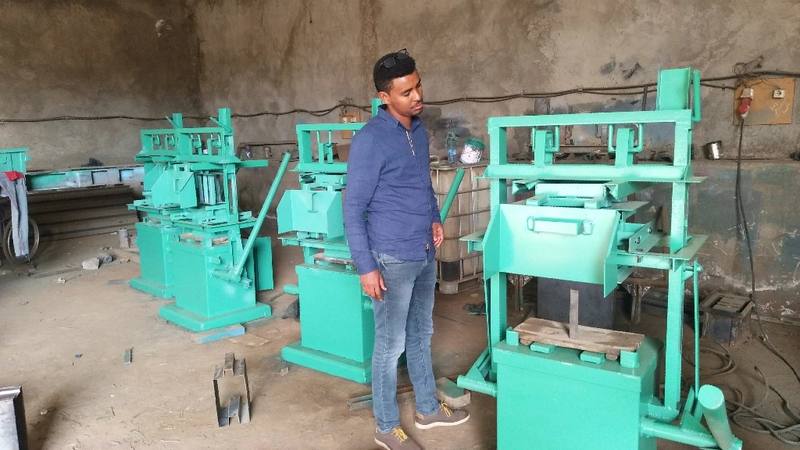
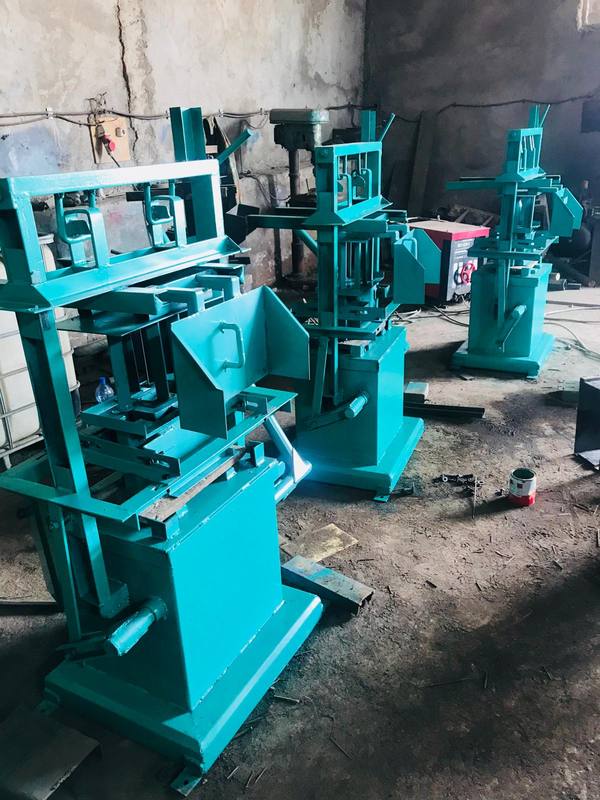
- Mold fabricationPrecision steel molds
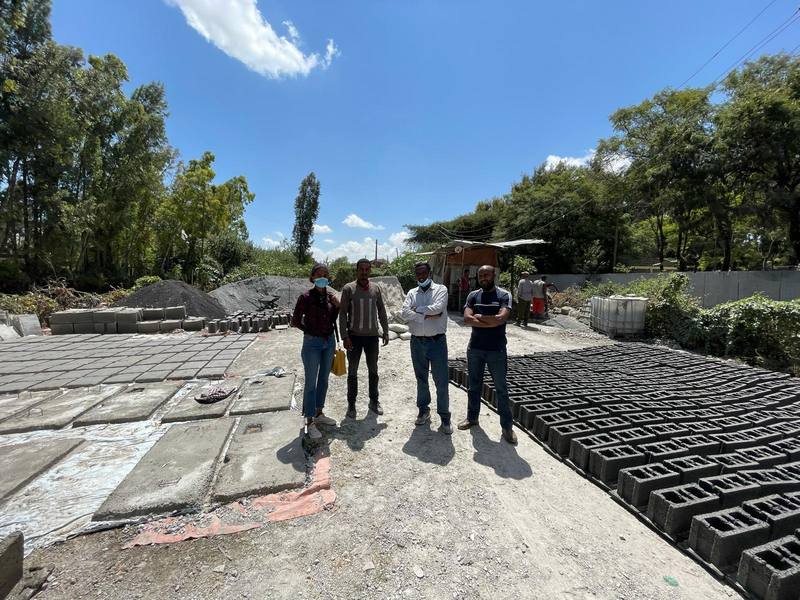
- Local concrete enterpriseStandard batching and curing
- Trained artisansFast, repeatable assembly
- Turnkey household toiletOne predictable price
Running in parallel: demand and finance
- Targeted marketingPromotion and community events
- Eligible demand screeningHouseholds ready to buy
- Loan from a local lenderWhen financing is needed
- Order placedStraight to the enterprise
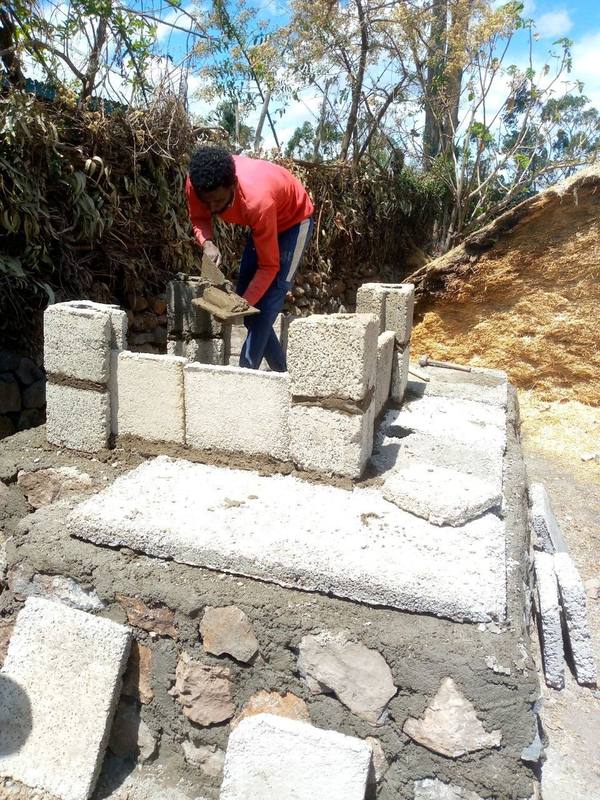
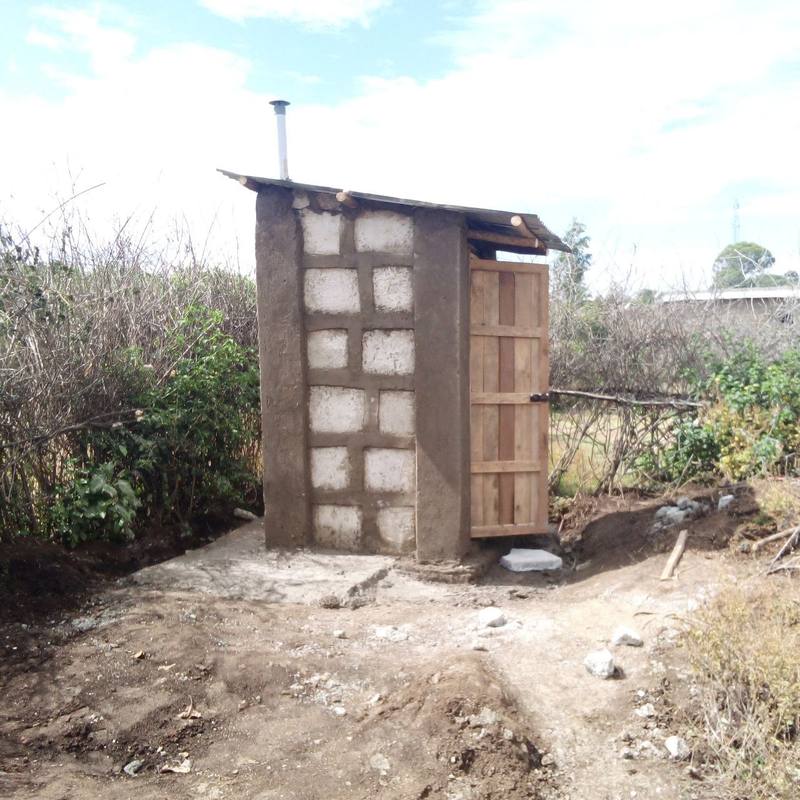
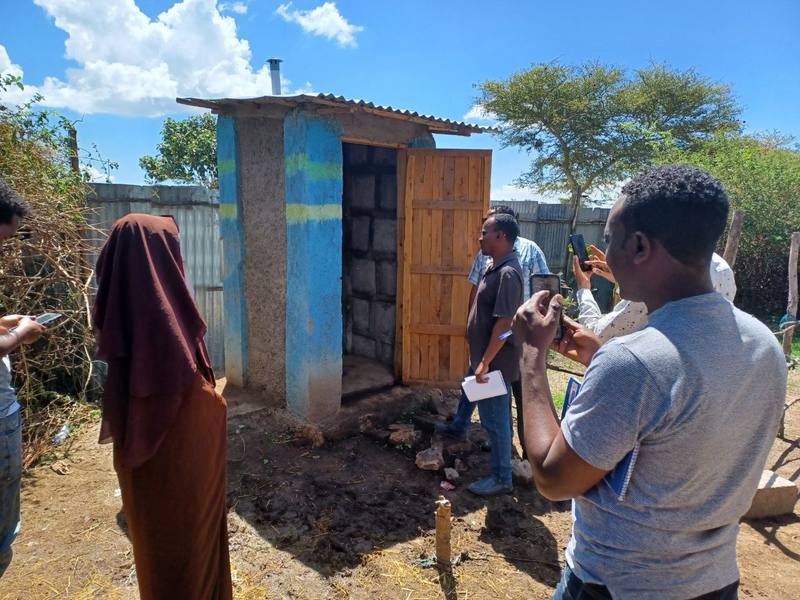
A photo of every step, from every town
Each town where we worked had its own messaging group. Artisans and supervisors posted photos of every toilet at every stage, from marking out and digging to the last panel and the door.
- Quality assurance without driving to every site.
- Accountability for lenders and enterprises before payments were released.
- Social proof: every new toilet and community event encouraged neighbours to order their own.
From one town to multiple regions
A first pilot in Adama proved the product, the delivery model and loan repayment. It then expanded to four zones of the Oromia region and on to the Amhara region, with consistent quality across many independent enterprises.